

Branding for Stationery, Toy and Baby Brands
In this category the child usually uses the product, the parent makes the decision and a retailer makes the sale. We build identity and communication systems for stationery, toy and baby brands that can speak to all three at once.
The Industry's Brand Problem
The first problem for stationery, toy and baby brands is a double audience. The child chooses or uses the product; the parent pays and has the final say. Talk only to the child and you lose the parent's trust; talk only to the parent and you lose the child's interest. With Play-Doh stationery, this balance was our starting point for working out why plain product posts were not getting any engagement.
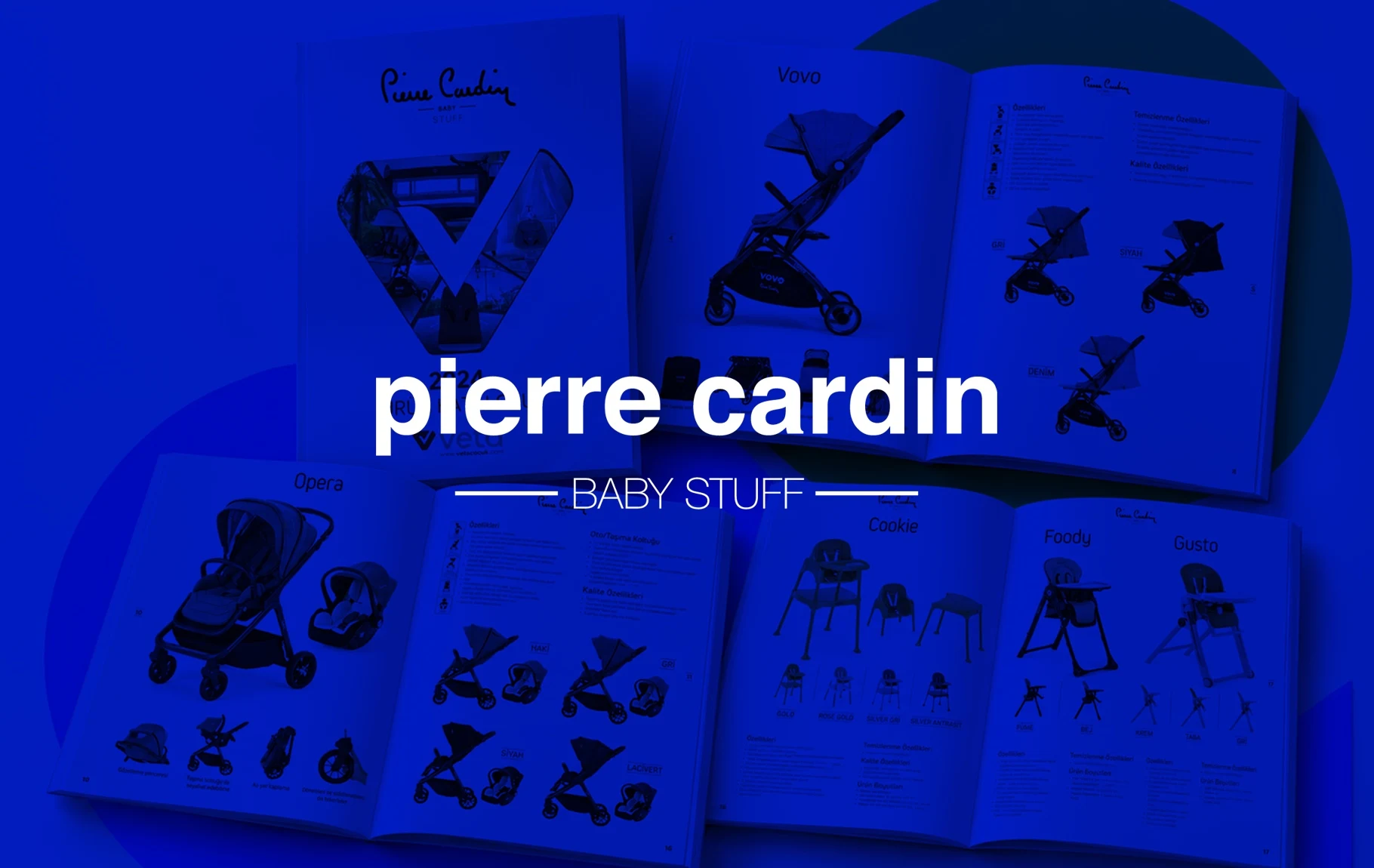
On the baby side, safety decides everything. A parent buying a car seat, a pushchair or a high chair first wants to know whether it is safe. At Kanz we saw that the more the discount message took over during a busy campaign calendar, the weaker the sense of safety became; for the Pierre Cardin Baby Stuff catalogue, our starting point was presenting technical data alongside the brand's prestige instead of squeezing it into standard tables.
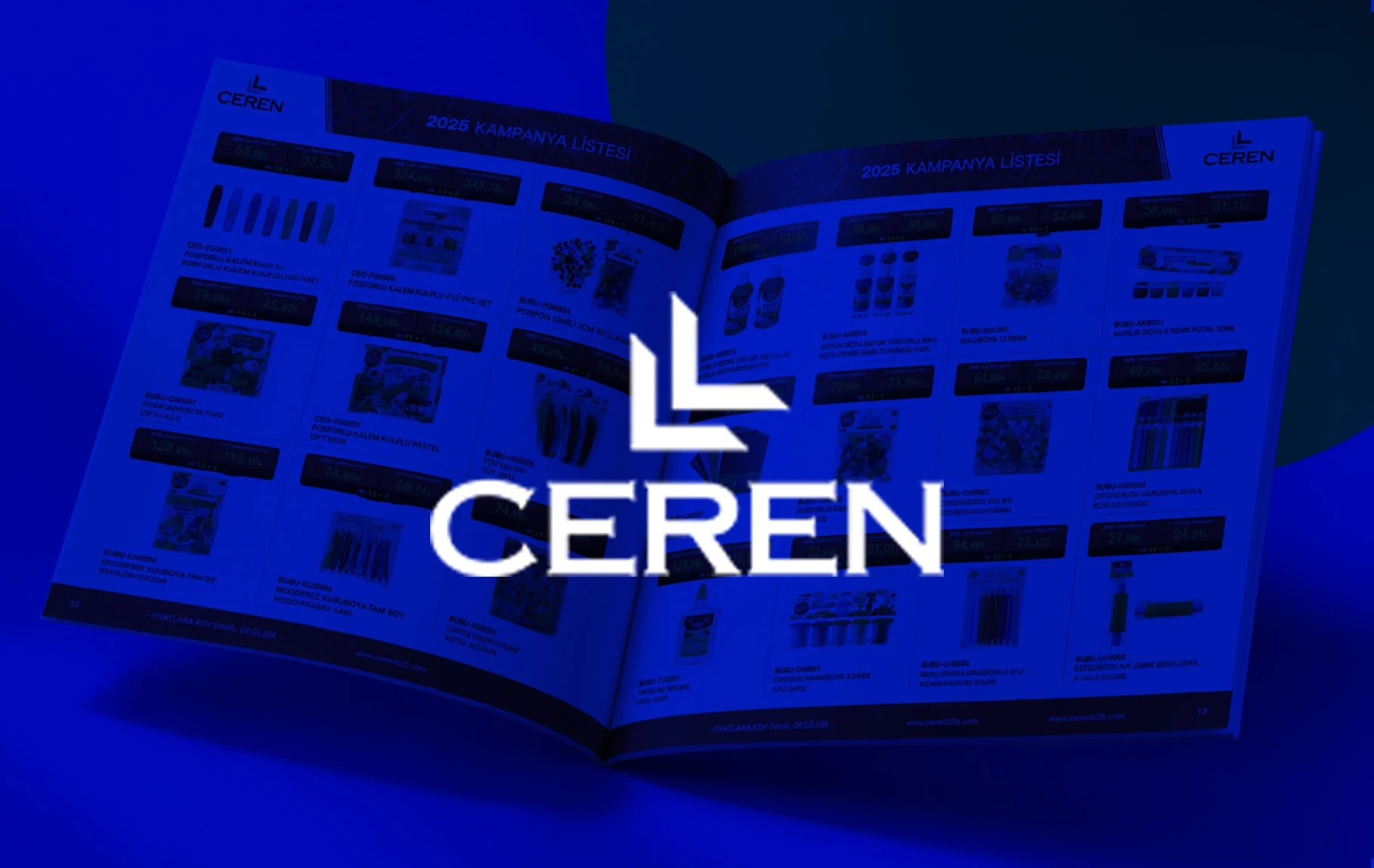
In stationery and toys, the issues are range size and seasonality. A large number of products, variants and promotional prices have to turn into sales within short windows such as back-to-school and the new year. Because the season is short, the catalogue, shelf materials and social content all need to be ready at the same time. For Ceren's campaign catalogue, our starting point was stopping that density from becoming a heavy reading load for retailers and the field sales team.
Finally, there is packaging and the shelf. Here, packaging is both a sales tool and an information carrier: age range, usage and safety information all need space, and they can crowd out the brand entirely. The real design job is a layout that stands out on the shelf while still carrying all of that information in full.
How We Approach It
01
Trust for parents, curiosity for children
We build the visual language in two layers: colour, character and play catch the child's attention, while product information, safety and usage details are as clear as a parent needs them to be. Both layers live within the same identity without drowning each other out. If there is a mascot or character, it needs to follow the same rules everywhere, from packaging to social media.
02
Campaign hierarchy for baby brands
During campaigns we keep the product and model name up front and the discount clear but secondary, in a badge. The campaign period is signalled by the background colour rather than the message itself, so sales get a push without breaking the reassuring product language. As product names repeat from one campaign to the next, they become recognisable.
03
A catalogue system for retailers
We reorganise a broad portfolio with a modular grid, a fixed product code hierarchy and colour-coded categories. Retailers and the field sales team find what they need quickly, and promotional prices read at a glance. The same system works across the printed catalogue, the digital catalogue and retailer presentations.
04
Community and engagement content
On social media, rather than just presenting products, we build content lines that invite children and parents to play: questions, how-to posts and calls for user-generated content. A mascot, typography and colour system tie these different formats back to one brand. We plan the content calendar ahead for periods such as back-to-school, the new year and key dates.
Our Work in This Industry
Brands We Work With in This Industry





Frequently Asked Questions
What should a baby brand's logo and identity look like?
A baby brand's identity should feel warm but serious. Soft colours and friendly typography create closeness, while a clear information hierarchy and consistent applications reassure parents. An overly childish style can undermine the brand's credibility on safety-led products such as car seats and pushchairs. It should also be tested early to make sure the logo stays legible on packaging, on the product itself and on small screens.
Should a toy brand talk to children or parents on social media?
Both, but with different content. Play and question posts draw children in, while posts on usage, age suitability and safety support the parent's decision. Ad targeting, however, should be aimed at parents; advertising that targets children is also restricted by the platforms' own rules. Tying both types of content together with the same mascot, colour and typography keeps the feed coherent.
How should a stationery brand prepare for back-to-school?
Back-to-school is one of the most important selling periods in stationery, so preparation should start early with the retailer catalogue and campaign plan. Producing product groups, promotional prices and shelf materials from one visual system keeps things consistent in store and on social media. During the season, how-to and inspiration content usually gets more engagement than plain product announcements.
Do promotions damage trust in baby products?
They can, if they are not set up carefully. When the discount message overtakes the product, parents start thinking about price instead of safety. Keeping the product and model name up front and placing the discount clearly but in a secondary position lets the promotion support sales while protecting trust. Signalling the campaign period with a background colour or a fixed badge stops the message from overshadowing the product.
How do you put together a baby products catalogue?
A baby catalogue should present what parents look for (safety standards, materials, ergonomics, colour and fabric options) in easy-to-read diagrams. Building this information around product imagery, instead of squeezing it into tables, creates a perception that matches the brand's positioning. The catalogue should also work as an advisory tool for sales staff in store. Showing colour and fabric options in a single matrix makes comparison easier for parents.
What matters in toy and stationery packaging?
Packaging should be recognisable from a few metres away and, up close, carry age range, usage and safety information in full. Mandatory information varies by product group, so the content list should be settled before design starts. For product ranges, a shared packaging framework makes the family read as one on the shelf. Packaging that stays legible in e-commerce images matters for online sales too.
Let's Give Your Growth a Clear Direction.
Let's start with a strategic conversation that unlocks your brand's potential.
Get in Touch